

I bought a new gaming PC just for Dragon Age: The Veilguard. Yes, really. When Dragon Age: The Veilguard was released, I wanted to dive back into Thedas. I haven’t finished the game yet, but I already have many hours behind me, enough to give an honest first impression.
A new PC makes Veilguard shine
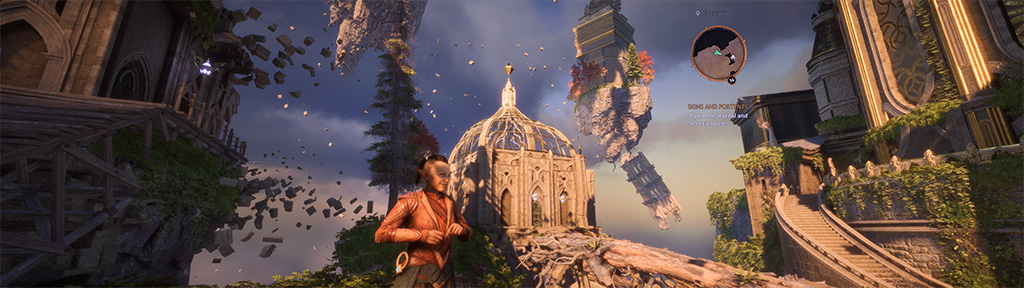
I play on PC, and I have to say that the power of my new machine really makes Veilguard shine. Visually, The Veilguard is impressive: lighting, character models, and environments are among BioWare’s best, even if the graphics don’t exactly reinvent the genre. The framerate is smooth and loading times are very reasonable.
The controls feel natural on PC. The keyboard and mouse work together flawlessly. Menus and ability selection are easy to manage. During combat, you can command your party members to cast spells, heal, or use special abilities. Otherwise, companions act independently, and they don’t even drop-dead mid-fight, since party members no longer have their own health bars.
Saving the world (again)
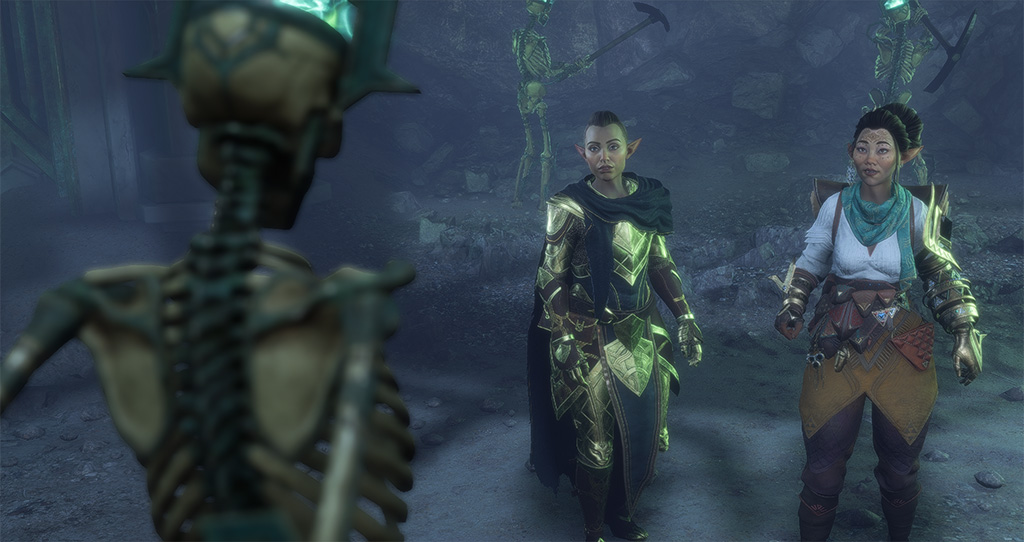
The story starts in a familiar way, but not in a boring one. The player is thrown straight into events that quickly escalate from a crisis into a major conflict. Your character, Rook, gathers a group and travels across Thedas. On each mission, Rook can bring along two companions.
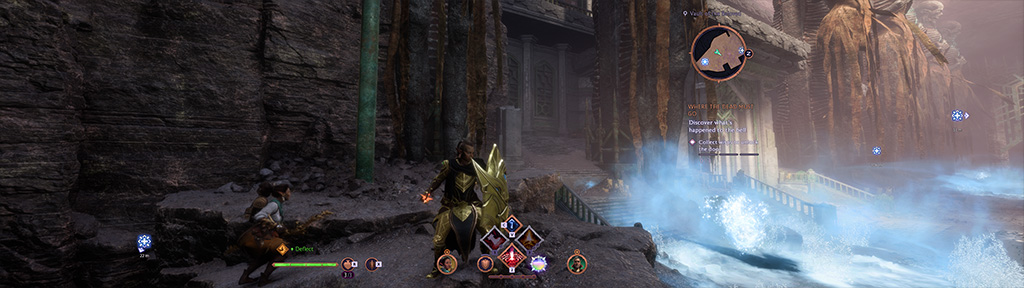
I created Rook as a long-eared sword-wielder.
The characters are easy to warm up to. Many of them turn out to be deeper than their first impression suggests. Conversations feel meaningful, and the group’s internal dynamics gradually become an important part of the experience. When it comes to romances, the pacing now feels more controlled and subtle than before. So far, I’ve only gotten as far as a bit of flirting.
The story may not be the most ambitious in the series, but it is well built and manages to connect old and new elements. Fans will notice small references to earlier events, but new players can jump in without feeling lost.
Smooth gameplay, but not revolutionary
The combat system is faster and more action-oriented than in older Dragon Age games. This means there is less emphasis on the classic pause-and-plan tactical style. Veilguard clearly aims for more dynamic battles. That said, you can still open the ability wheel to pause the action if you need a moment to think.
Character progression offers a variety of choices that shape both your playstyle and your character. Your decisions show up in dialogue and affect relationships with companions, even if their impact on quest outcomes is sometimes limited.
There is a bit of repetition at times, but it’s easy to forgive when you’re rewarded with well-written moments or stunning landscapes.
A wide but focused world
Compared to earlier Dragon Age games, Veilguard feels tighter and more focused. This may disappoint players who hoped for a huge open world, but on the other hand the game never feels overwhelming, and you rarely must guess where to go next. Many quests move in a fairly linear, corridor-like way, but if you take time to explore, you can often find coins or other collectibles.
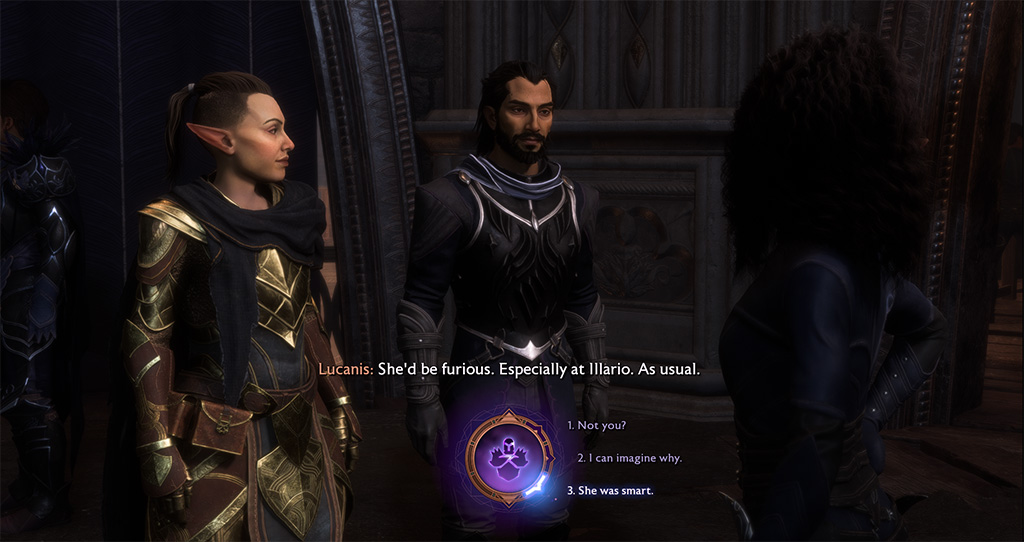
The characters are clearly the heart of the game. The amount of attention given to them shows not only in dialogue, but also in how they react to the environment, to each other, and to your choices. The game successfully captures BioWare’s classic storytelling. At times it feels like dialogue options don’t matter much, but then the game surprises you, and your choices suddenly have dramatic consequences.
I can’t yet comment on the ending, but I’m very curious to see how the world will be saved or if it will be saved at all…